
Nine sessions and 131 participants point to a shared need: a better way for Oregon's music communities to find and support each other
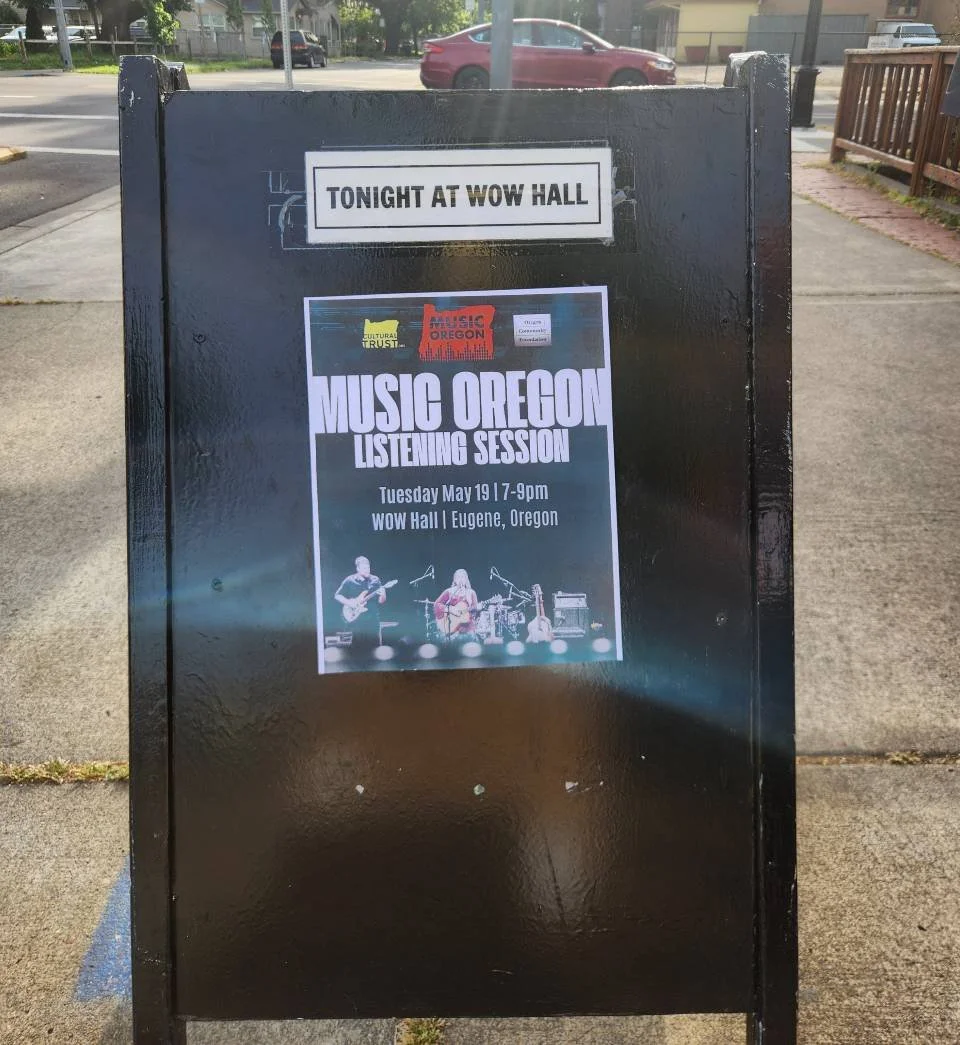
MusicOregon has released the final report from its 2026 Statewide Listening Tour, a series of nine public sessions held between May 16 and July 30 to hear directly from musicians, venue operators, and the people who support them. In all, 131 people took part across eight in-person sessions in seven communities (Hood River, Tillamook, Salem, Eugene, Southern Oregon, Bend, and Pendleton) and one statewide virtual session.
Each session included the same five prompts: the local scene, the hardest parts, infrastructure and resources, connection and isolation, and what would actually help. The report summarizes the conversations topic by topic, and community by community. It also reports each topic by the number of sessions in which it came up, rather than treating any issue as universal.
"Between May and July, Cheri Jamison, Dick Huey, and I drove more than 1,500 miles around the state and asked the same basic question everywhere we went: what is actually happening here?" said Tim Wilson, MusicOregon Board President. "There were real regional differences, but people had more in common than not. Almost every room asked for some version of the same thing, a way to find and connect with other musicians, venues, and music businesses in Oregon.”
What participants said
A shared musician and venue directory (7 of 9 sessions). The tour's most consistent request was a searchable resource where musicians, venues, and other music businesses can find one another.
Business-of-music training (8 of 9 sessions). Musicians and venue operators described the same gap: people who know how to make music but not how to run the business side of it, from contracts and deal structures to press kits and self-promotion. Klamath Music's workshop series in Klamath Falls was cited as a working local model.
Regular convening (7 of 9 sessions). Most sessions asked MusicOregon to treat the tour as the start of an ongoing relationship, with regular local and regional meetups.
Public sector partnership (7 of 9 sessions). Experiences varied widely, from communities that described local government support as largely absent to Bend's June session, where relationships with Visit Bend, COIC, and the Oregon Arts Commission produced the tour's most concrete discussion of funding and policy.
PRO licensing enforcement (5 of 9 sessions). Venue operators described enforcement by third-party agents acting for ASCAP, BMI, and SESAC as a serious and often confusing problem. The report identifies this as the clearest candidate for a formal MusicOregon policy position.
Other recurring topics included: regional touring routes especially between smaller markets, the perception that Portland is the Oregon music scene, the loss of local arts and music media coverage, and a drop in live-show attendance following the pandemic.
“It was a genuinely useful conversation, and it’s good to see MusicOregon putting this kind of groundwork in across the state,” said Travis Ehrenstrom, a Central Oregon songwriter who performs solo and with his band TEB, after attending the June 22 session in Bend.
Limits of the findings
The report is direct about what nine sessions could not cover. The Pendleton session drew a single participant, and many virtual attendees came from communities the tour had already visited. MusicOregon notes that Eastern Oregon in particular needs further outreach before the organization can say it has heard from that region in a meaningful way. Dollar figures and other numbers shared by participants are treated as anecdotal and are not compared across communities.
About the tour
Tim Wilson (Board President), Cheri Jamison (Music Advocacy Council Co-Chair), and Dick Huey (Board Member) facilitated the tour. The initiative was funded by the Oregon Community Foundation's Arts Rebuilding Grant, with additional support from the Oregon Cultural Trust. Sessions were recorded and transcribed, and MusicOregon used AI tools to help organize themes from the transcripts; the facilitators fact-checked the results against the transcripts and edited the final report. Participant comments in the report are anonymous throughout.
The findings will inform MusicOregon's strategic planning in the coming months. MusicOregon is already working on a new integrated membership database, online directory, community forum, and website expected to launch in early 2027.
Download the reports here:
MusicOregon 2026 Statewide Listening Tour, Part I - Final Report
MusicOregon 2026 Statewide Listening Tour, Part II - Site Reports
