
A city with a soundtrack in mind
By Florian Raqueno, MusicOregon Board of Directors
A festival can fill a weekend. A music destination gives people a reason to return in every season.
That is the ambition taking shape in Pendleton, Oregon: to build on the city’s existing festivals and venues and become a year-round, multi-genre destination for live music and tourism. The idea is larger than adding shows. It is about connecting stages, streets, businesses, artists, and visitors into an experience that feels distinctly Pendleton.
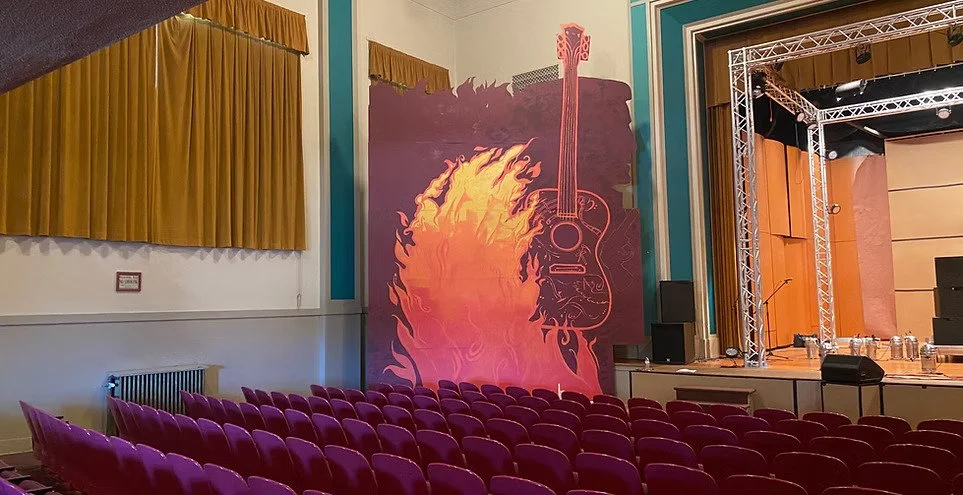
“We have two music festivals in Pendleton which is unusual in a town this size, 15,000 people, and they are both very-well attended...Jackalope Jamboree brings in 15 to 20 entertainers and each July is Pendleton Whiskey Fest which is all A-Listers,” said Pendleton Convention Center Manager Pat Beard, who is also in charge of the Blue Mountain Equine Center and Vert Auditorium.
Beard’s vision is both cultural and practical and is shared with cohorts Cole Rixe, Business Development Manager at Pendleton UAS Range, and Steve Chrisman, economic development manager for the city of Pendleton sees a durable ecosystem in which music supports tourism, downtown activity, and cultural life—while tourism and local business help sustain the music.
Right now, the trio have a seed fund and are looking for support, grants and other avenues to make the vision real.
Rixe says what kickstarted the collaboration was a conversation he and Chrisman had with Addison Schulberg, owner of Great Pacific, a restaurant and live music venue on Main Street.
“Addison has a steady stream of musicians that are passing from Boise to Portland but he can only host so much...if we can get some music equipment, capture some of these musicians and just make it as as turnkeyas possible and say ‘come here, come plug in, play, make some bucks, then we can always become that music hub destination.”
The opportunity is to connect those pieces more deliberately with a year-round strategy that could link established events, venue programming, and new performances into a more consistent calendar.
At the center of the proposal is a music hub supported by shared production equipment. The concept addresses one of the practical challenges of live performance: the resources required to present a strong show can be difficult to secure, especially when every artist, promoter, or venue must solve the same production needs independently.
Shared equipment could make it easier to stage performances, support a wider range of artists, and build consistency from one event to the next. It could also help the city think beyond individual bookings, creating infrastructure that serves the broader music ecosystem rather than a single program. Its value would be measured not only in the performances it hosts, but in the activity it enables elsewhere: more capable events, stronger collaboration, and a lower barrier to bringing live music to Pendleton. It has a next chapter with a soundtrack.
